
- SMB Jugaad
- November 20, 2025
- Business

By Srinivas GRK 👉
On a humid afternoon in Houston, Mark — the owner of a 14-employee HVAC services company — opened a letter from a major client. The message was brief but alarming: “Due to new AI compliance requirements, we must review your data-handling processes before renewing the contract.”
Mark froze. His business had recently adopted AI tools to automate scheduling, customer reminders, and billing. He never imagined that these simple tools could trigger regulatory reviews.
That night, he couldn’t sleep. What if I unknowingly violated a rule? What if I lose clients? What if audits become mandatory?
Over the next few weeks, Mark studied everything he could about the Future of AI Regulation in the U.S. He hired a consultant, restructured his data policies, trained his team, and upgraded his software stack. Months later, he closed his biggest contract ever — because he was compliant.
His story represents every SMB’s upcoming reality. AI will unlock incredible opportunities, but the rules are changing — fast.
Why the Future of AI Regulation in the U.S. Matters for Every SMB
AI is no longer a luxury; it’s baked into daily business operations. From scheduling apps to email assistants to customer support bots, the modern U.S. SMB is already using AI — often without realizing it.
Here’s why you must understand the Future of AI Regulation in the U.S.:
- Laws will affect how you collect, store, and use customer data
- Non-compliance will lead to fines, penalties, and lost partnerships
- Large enterprises will require SMBs to follow AI standards before working with them
- Customers will choose trustworthy, compliant brands
- AI vendors will start asking businesses to sign AI usage compliance agreements
Ignoring regulation isn’t an option anymore, especially in sectors like retail pharmacy, e-commerce, real estate, healthcare, financial services, and logistics.
The Current State of AI Regulation in the U.S. (2024–2025)
While the U.S. doesn’t yet have a single nationwide AI law like the EU’s AI Act, multiple federal and state initiatives are shaping rules that businesses must follow.
Federal Landscape
Key federal actions include:
- Executive Orders on AI Safety & Transparency
- NIST AI Risk Management Framework (RMF)
- FTC guidelines on AI unfair practices
- White House Blueprint for an AI Bill of Rights
- Sector-specific guidelines for healthcare, finance, and employment
These form the foundation on which the Future of AI Regulation in the U.S. will be built
State-Level Movement
States leading the regulatory wave:
- California (privacy + automated decision-making)
- Colorado (AI governance
- Texas (state agency AI laws impacting vendors)
- Illinois (biometric and facial recognition restrictions)
- New York (AI audits for hiring & employment)
If your SMB deals with these states, you’re already in regulated territory.
The 5 Core Pillars That Will Shape the Future of AI Regulation in the U.S.
SMBs must prepare for upcoming regulations centered around five pillars:
Transparency & Disclosure
Businesses will need to openly declare:
- When AI is used to make decisions
- When chatbots or automated agents interact with customers
- What customer data is being used by AI
- Whether AI influences hiring, pricing, or recommendations
Customers may gain the right to opt out of automated decision-making.

When the trust is high, communication is easy, instant, and effective. - Stephen Covey
Also Read: AI Ethics for Small Medium Business: How to Protect Your Customers and Build Trust in 2025
Data Privacy & Protection
Future regulations will strengthen:
- Encryption requirements
- Consent systems
- Data retention rules
- Cross-border data handling
- Vendor security audits
This is crucial if your AI tools store contact info, medical data, property information, or billing details.
Bias, Fairness & Anti-Discrimination
AI tools will require:
- Regular fairness audits
- Bias-free training datasets
- Non-discriminatory decision processes
Industries like hiring, lending, insurance, real estate, and healthcare must pay special attention.
Safety, Reliability & Human Oversight
The new norm will be:
- “Human-in-the-loop” (HITL) decision systems
- Verified training data
- Clear responsibility for errors
- Fail-safe protocols for automated decisions
The Future of AI Regulation in the U.S. will demand clear accountability.
Vendor & Tool Accountability
SMBs will be held responsible for:
- The tools they use
- The data they upload
- The permissions they grant vendors
- How AI outputs are used internally
Even if the AI vendor causes the issue, you, the business owner, may be held accountable for consequences.
High-Risk AI Use Cases SMBs Must Be Cautious About
Certain uses of AI will face stricter scrutiny:
-
Hiring & Employment Decisions
Automated resume screening and interview scoring will require: Bias audits Explainability Disclosure to candidates
-
Customer Profiling
Personalized pricing or targeted offers must not be discriminatory.
-
Healthcare-related Services
AI symptom checkers, diagnostics, or pharmacy tools will require compliance.
-
Financial Decisions
Credit scoring, lending decisions, and fraud detection require human oversight.
-
Data-heavy AI Tools
Any tool that stores private data — from CRM systems to chatbots — must follow strict guidelines. This is exactly why understanding the Future of AI Regulation in the U.S. is no longer optional.
What SMBs Should Do Now (Before Laws Become Mandatory)
SMBs who move early will win big. Here’s what you can begin today:
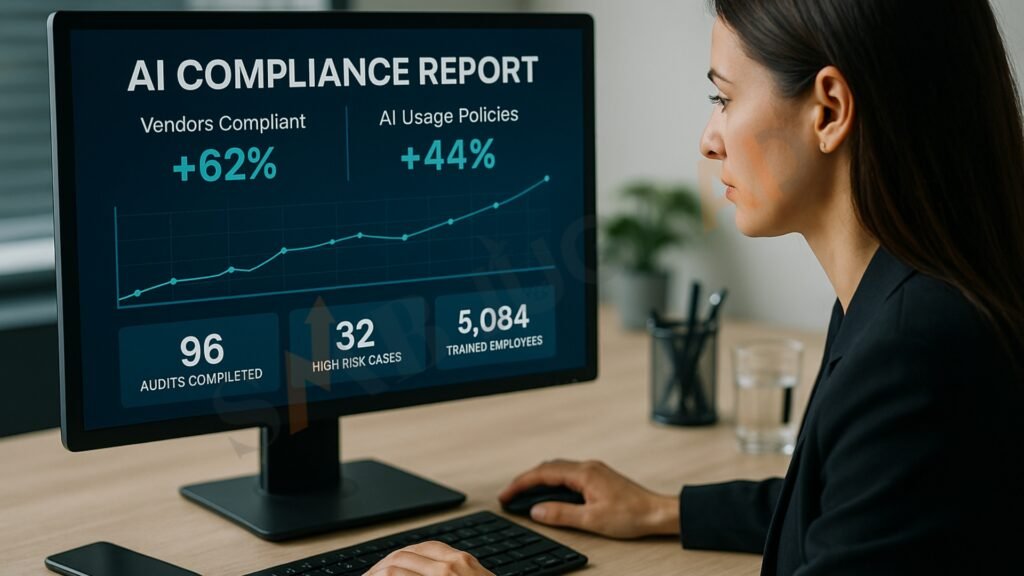
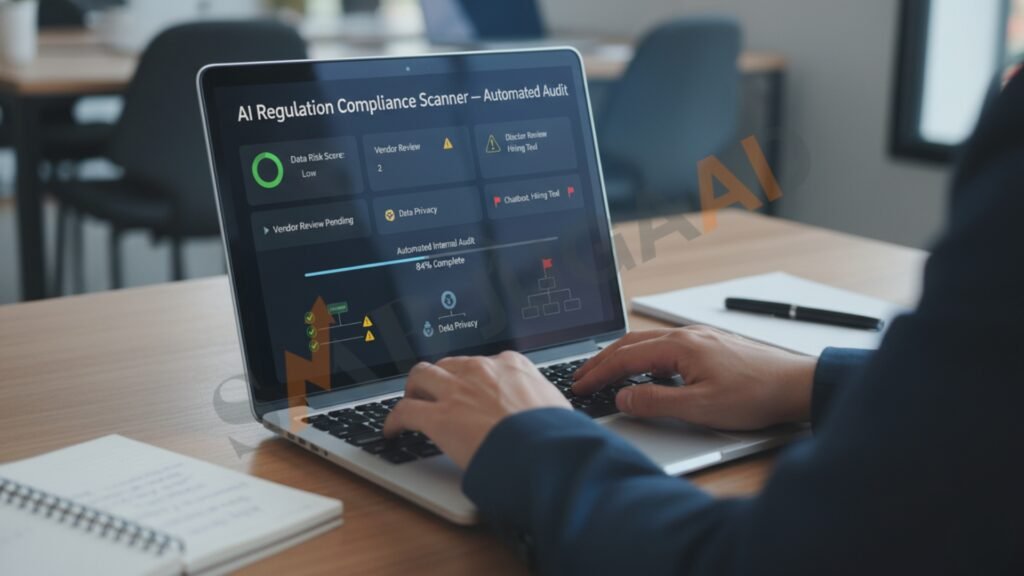
Step 1: Conduct an Internal AI Audit
Questions to ask:
- What AI tools do we use?
- What data do they access?
- Do customers know AI is involved?
- Do we have human review points?
These tasks don’t require emotional intelligence.
Step 2: Review Vendor Agreements
Look for:
- Data storage location
- Ownership rights
- Opt-out clauses
- Liability terms
Step 3: Create an AI Usage Policy for Your Organization
Every SMB will eventually require:
- Clear AI boundaries
- Transparency guidelines
- Data privacy steps
- Human oversight points
Step 4: Add AI Disclosures Where Needed
Examples:
- “This chat response may be supported by AI tools.”
- “Your application may be screened using automated systems.”
Step 5: Train Staff on Ethical AI Usage
Your team must learn:
- What AI can and cannot decide
- When to escalate to a human
- How to avoid over-reliance
Step 6: Use AI Tools That Are Compliant by Default
Choose AI vendors that offer:
- SOC 2
- HIPAA compliance
- GDPR alignment
- NIST RMF frameworks
Your AI stack should grow with the Future of AI Regulation in the U.S.
Industry-Specific Breakdown — What Each U.S. SMB Should Prepare For
Retail Pharmacies
- AI-driven reminders → must disclose
- Prescription data → must be protected
- No algorithmic bias in pricing or recommendations
Real Estate
- Automated lead scoring → transparency required
- AI tenant screening → bias audits
- Predictive pricing → fair housing compliance
E-Commerce
- AI recommendations → must avoid discriminatory pricing
- Chatbots → require clear identification as AI
- Customer data → must follow strict retention rules
Healthcare Coaching & Wellness Businesses
- AI symptom tools → high-risk
- Emotional chatbots → require disclaimers
- Medical data → highest privacy requirements
Professional Services
(consultants, agencies, accountants)
- AI summaries → must maintain confidentiality
- Client data → must be encrypted
- Automated emails → require oversight
The Future — What Regulations Will Likely Look Like in the Next 5 Years
Based on federal frameworks, upcoming U.S. AI laws will likely include:
- Mandatory AI disclosures
- Mandatory fairness audits for high-risk use
- Data minimization rules
- Prohibition of certain AI use cases
- Mandatory customer consent
- Strict penalties for misuse
- Certification requirements for AI vendors
- Licensing for high-risk AI systems
For SMBs, this means updating tools, processes, and training — not panicking, but preparing.
Conclusion
AI isn’t slowing down. Regulations aren’t either.
The SMBs who move early, prepare early, and adapt early will become the most trusted brands in the U.S. market.
In the next decade, customer trust, not technology, will be the ultimate competitive edge.
Understanding the Future of AI Regulation in the U.S. isn’t just smart — it’s necessary for survival, scalability, and success.
"Men are rich only as they give. He who gives great service gets great rewards." – Elbert Hubbard,
Do SMBs really need to worry about AI regulations?
When will federal AI laws be enforced?
What happens if my SMB ignores AI compliance?
What’s the safest first step for SMBs?
Will AI tools become illegal?
By Srinivas GRK
Srinivas GRK is the Founder of SMBJugaad LLC and a Cloud, AI, and Oracle Expert with over two decades of experience in technology and digital transformation. He’s passionate about helping small and mid-sized businesses leverage AI, Cloud, and smart automation to scale faster. You can connect with Srinivas on LinkedIn