
- SMB Jugaad
- November 19, 2025
- Business

By Srinivas GRK 👉
On a chilly Monday morning in Chicago, Sarah — the owner of a small but fast-growing wellness brand — opened her inbox to find over 300 customer messages waiting. Some were simple order updates. Others were heartfelt notes from customers dealing with stress, anxiety, or burnout. She had recently implemented automation tools to handle responses faster, and while they did save her time, something felt off.
Customers were replying with, “Is this really you?” or “This sounds robotic.”
Her heart sank.
Sarah realized something that every modern U.S. business owner eventually faces: Automation can scale operations, but authenticity builds trust.
She spent the next few weeks redesigning her system — combining AI automation for efficiency and human-driven touchpoints for emotional connection.
Today, her sales are higher than ever, and customers feel more connected to her brand than before.
Her journey became a perfect lesson in how U.S. businesses can balance automation and authenticity — without losing soul or scalability.
Why Balancing Automation and Authenticity Matters More Than Ever
The modern marketplace is in a constant tug-of-war. On one side, businesses want rapid growth, reduced costs, and scalable operations. On the other side, customers demand genuine conversations, empathy, and personalized attention.
This is where the heart of the topic lies: Businesses Can Balance Automation and Authenticity to create a powerful hybrid model that grows revenue and strengthens relationships.
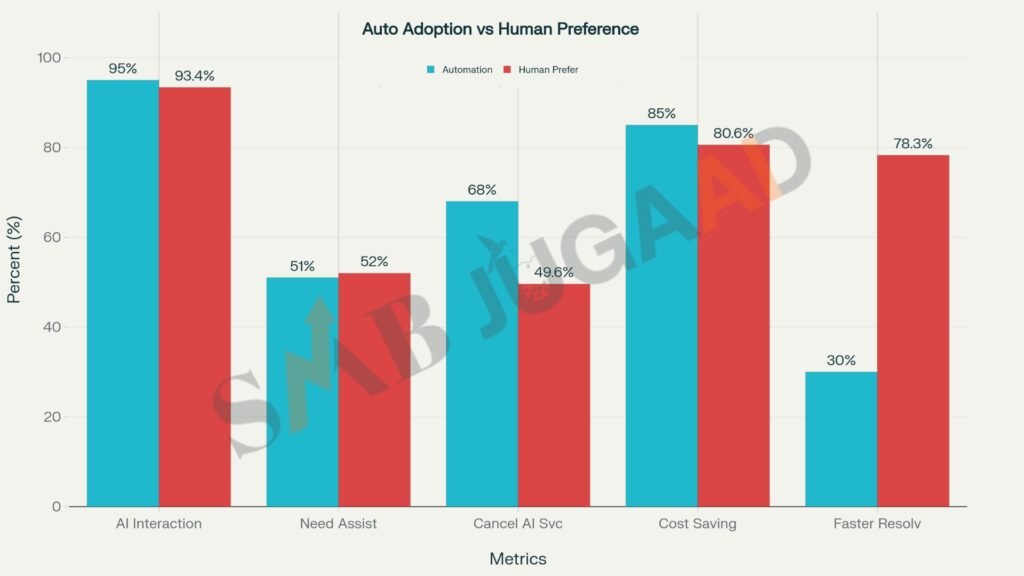
According to U.S. consumer behavior studies (2024),
- 78% prefer brands that offer fast, automated updates.
- 62% say they trust brands less when communication feels overly robotic.
- 81% are willing to pay more for personalized, human-driven customer support.
The message is clear:
Efficiency attracts customers, but authenticity retains them.
What Does Authenticity Really Mean for U.S. Businesses?
Authenticity is not about showing vulnerability or sharing personal stories alone. In the business environment, authenticity means:
-
Being Transparent
Honesty about pricing, delays, policies, and processes.
-
Being Relatable
Customers lean toward brands that understand their challenges and speak their language.
-
Being Human in Interactions
Even if automation is present, your tone should feel warm, empathetic, and real. When Businesses Can Balance Automation and Authenticity, they create experiences that feel effortless but meaningful.
How Automation Helps — Without Replacing the Human Element
Automation is not the enemy. Misuse is.
Here’s how U.S. businesses can use automation to enhance operations:
Smart Task Offloading
- Customer self-service buttons
- Limit access to AI systems
- Chatbots answering FAQs
This frees employees to handle high-touch situations.
Predictive Analytics
Automation helps forecast:
- Sales
- Inventory
- Customer churn
- Employee performance
It gives clarity and direction.

My job as CEO is to put players in the position to succeed.” – Gary Vaynerchuk, CEO of VaynerMedia
Also Read: AI Ethics for Small Medium Business: How to Protect Your Customers and Build Trust in 2025
Personalization at Scale
AI can recommend:
- Products
- Content
- Services
Based on customer history — a huge advantage in the U.S. retail, pharmacy, and real estate sectors.
Multichannel Communication
AI tools help businesses streamline responses across:
- SMS
- Social media
- List Item
Yet the core tone must still feel human.
Automation becomes powerful when paired with human warmth — proving once again that Businesses Can Balance Automation and Authenticity by design.
The Hidden Risks of Too Much Automation
If left unchecked, automation can backfire.
-
Loss of Brand Personality
Messages begin to feel identical. Customers lose emotional connection.
-
Robotic Interactions
It becomes clear when a brand relies solely on bots.
-
Reduced Empathy
AI can’t fully understand: Grief Financial struggles Family issues Cultural nuances This is dangerous for industries like healthcare, pharmacy, legal, and finance.
-
Customer Trust Declines
Once customers sense lack of genuine care, trust drops instantly. That’s why Businesses Can Balance Automation and Authenticity only when they intentionally design both halves of the system.
The Hidden Risks of Too Much Authenticity Without Automation
Ironically, leaning only on human interaction is also harmful.
-
Slower Response Times
Customers expect fast replies.
-
Human Inconsistency
Different employees say different things.
-
Higher Costs
Payroll increases faster than revenue.
-
Burnout
Employees get overwhelmed — leading to mistakes or poor experiences. So, the strongest U.S. businesses build a hybrid model where automation supports people — not replaces them.
The Ultimate Framework: How U.S. Businesses Can Balance Automation and Authenticity
Below is a simple 5-step blueprint:
Step 1: Automate the Operational Layer
This includes:
- Appointments
- Billing
- Shipping updates
- Inventory
- Lead tracking
- CRM tasks
These tasks don’t require emotional intelligence.

Map every point where data flows into your business — website forms, CRMs, chatbots, or analytics dashboards.
Step 2: Humanize the Experience Layer
This includes:
- Conflict resolution
- Personalized recommendations
- Post-sales support
- Feedback calls
- Brand story building
Step 3: Use AI to Empower Your Team — Not Replace Them
Examples:
- AI drafts emails → humans add the final personal touch
- AI predicts customer mood → humans respond mindfully
- AI sorts leads → humans convert them with empathy
Step 4: Maintain Human-Controlled Quality Checks
Regular audits ensure:
- Tone stays warm
- Automation works correctly
- Bots don’t give misleading information
Step 5: Invest in Human Stories
Authenticity grows when businesses:
- Share customer wins
- Highlight employee journeys
- Celebrate milestones
- Humanize mistakes and corrections
Real U.S. Business Scenarios: Perfect Balance in Action
Retail Pharmacy (High-volume, sensitive industry)
Automation helps:
- Prescription refill reminders
- Appointment booking
- Insurance verification
Authenticity shines through:
- Pharmacist counseling
- Side-effect explanation
- Compassion in difficult cases
Real Estate Agencies
Automation:
- Lead collection
- Market reports
- Property alerts
Authenticity:
- Personalized tours
- Human negotiation
- Emotional guidance during buying
E-commerce Brands
Automation handles:
- Order management
- Chatbot FAQs
- Shipping updates
Authenticity:
- Unboxing notes
- Brand storytelling
- Human customer support
In every case, Businesses Can Balance Automation and Authenticity by defining what to automate and what to humanize.
How Small and Medium Businesses in the U.S. Can Implement This Immediately
Here’s a fast-start approach:
- Use automation for logistics, not emotions.
- Add your personality to every automated touchpoint.
- Train employees to use AI-enhanced scripts, not AI-replaced conversations.
- Track customer sentiment regularly.
- Create a hybrid service model (AI-first + human-final).
Small businesses often outperform large corporations because they can maintain human warmth even at scale.
Conclusion
The future belongs to brands that master both sides — speed and soul.
AI can amplify efficiency, but humans amplify trust.
When Businesses Can Balance Automation and Authenticity, they create a customer experience that feels fast, personal, and unforgettable.
In the U.S. market — where customers are time-poor but emotionally aware — this balance becomes your biggest competitive advantage.
“Automation is driving the decline of banal and repetitive tasks.” —Amber Rudd
Why is balancing automation and authenticity important?
Which tasks should U.S. businesses automate first?
Can automation make a brand feel less authentic?
What industries benefit the most from balancing both?
How can small businesses stay authentic while scaling?
By Srinivas GRK
Srinivas GRK is the Founder of SMBJugaad LLC and a Cloud, AI, and Oracle Expert with over two decades of experience in technology and digital transformation. He’s passionate about helping small and mid-sized businesses leverage AI, Cloud, and smart automation to scale faster. You can connect with Srinivas on LinkedIn