
- SMB Jugaad
- December 10, 2025
- Business

By Srinivas GRK 👉
On a chilly October morning in Cleveland, Sam — owner of a small neighborhood convenience store — unlocked his doors and sighed at the shelves in front of him. Half the new snack items he ordered last month still sat untouched. Meanwhile, customers kept asking for drinks and seasonal products he didn’t stock enough of. Some items expired before being sold; others sold out too quickly, frustrating loyal customers.
Like many local U.S. store owners, Sam relied on gut feeling and last year’s patterns to order inventory. But customer behavior had changed — online shopping, unpredictable weather shifts, seasonal trends, and price fluctuations made demand more erratic than ever.
One evening, after losing yet another customer due to stockouts, Sam tried an AI-powered inventory and demand planning tool recommended by a friend. Within days, the system began forecasting which products would sell fastest, identifying slow-moving items, and predicting holiday surges with surprising accuracy.
By the end of the first quarter:
- Stockouts fell by 47%
- Expired inventory dropped by 60%
- Revenue increased by 22%
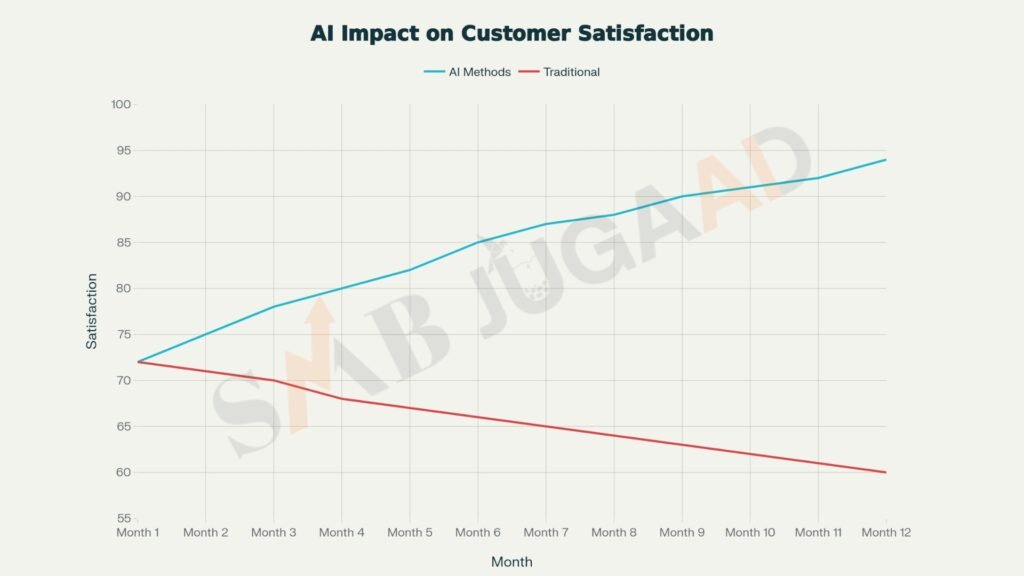
- Customer satisfaction soared
Sam now says,
“AI didn’t change my store — it changed the way I see my store.”
Across the U.S., small shops, grocery stores, boutiques, pet stores, liquor stores, and local markets are discovering the same truth:
AI makes inventory smarter, demand clearer, and growth easier.
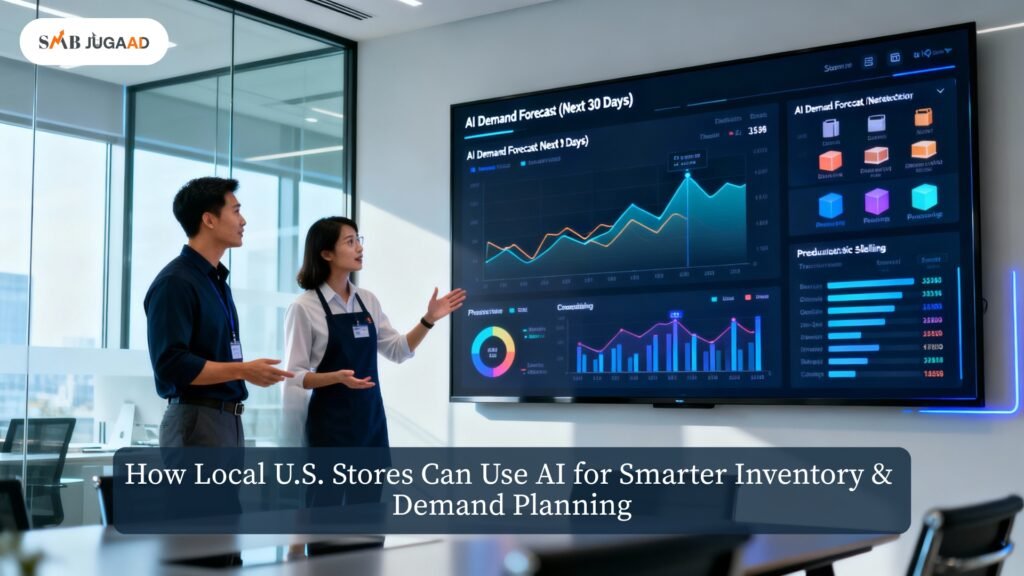
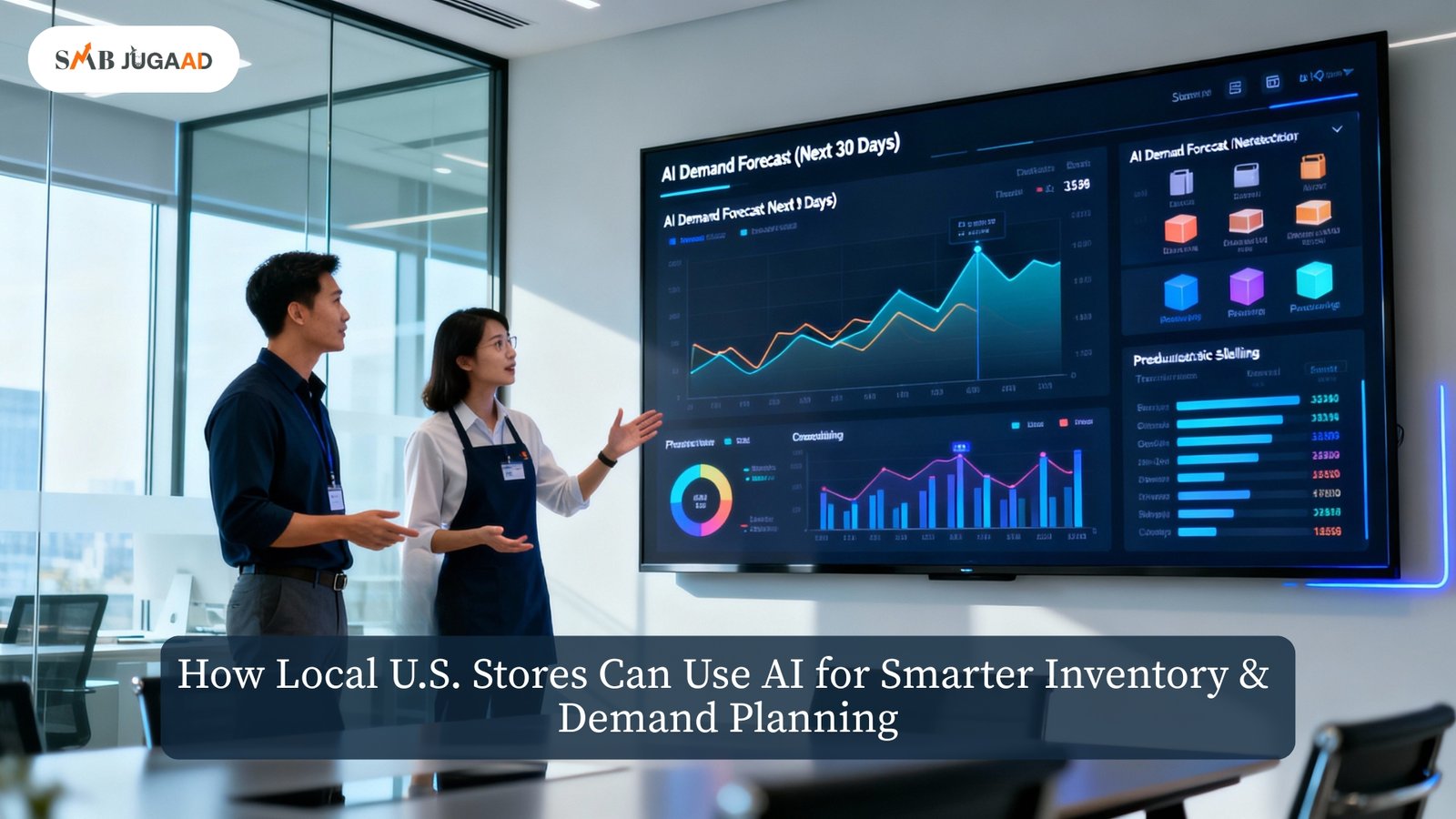
Why Local U.S. Stores Need AI for Inventory & Demand Planning
Local stores face more unpredictability today than ever:
- Changing customer preferences
- Seasonal fluctuations
- Supply-chain disruptions
- Weather variability
- Online competition
- Rising operational costs
- Limited storage space
- Perishable inventory challenges
Traditional planning methods — gut feeling, manual spreadsheets, old POS data — no longer work in 2026.
AI solves this by offering:
- accurate demand forecasting
- real-time inventory insights
- automated reorder recommendations
- expiration & spoilage prediction
- seasonal trend analysis
- supplier lead-time optimization
- location-specific recommendations
This lets local U.S. stores operate with the efficiency of big-box retailers — without the massive staff or budget.
How AI Improves Inventory & Demand Planning (Step-by-Step)
AI Analyzes Your Sales Data Automatically
AI pulls data from:
- POS systems
- Loyalty cards
- Transactions
- Seasonal sales trends
- Product categories
- Customer buying habits
This creates a detailed picture of what sells, when it sells, and to whom.
“The lead generation process starts by finding out where your target market ‘lives’ on the web.” – Wayne Davis
AI Understands Seasonal & Local Buying Patterns
AI identifies:
- Winter vs. summer shopping shifts
- Holiday demand spikes
- Weather-related demand changes
- Weekend vs. weekday buying patterns
- Tourism influence
- Neighborhood demographic impact
Local stores benefit the most because demand varies by ZIP code.

AI Predicts Future Product Demand
AI forecasting models predict:
- how much you will sell next week
- how much you will sell next month
- which items will surge
- which items will slow
- which products will expire
- which categories will trend
This helps you avoid stockouts and overstocking.
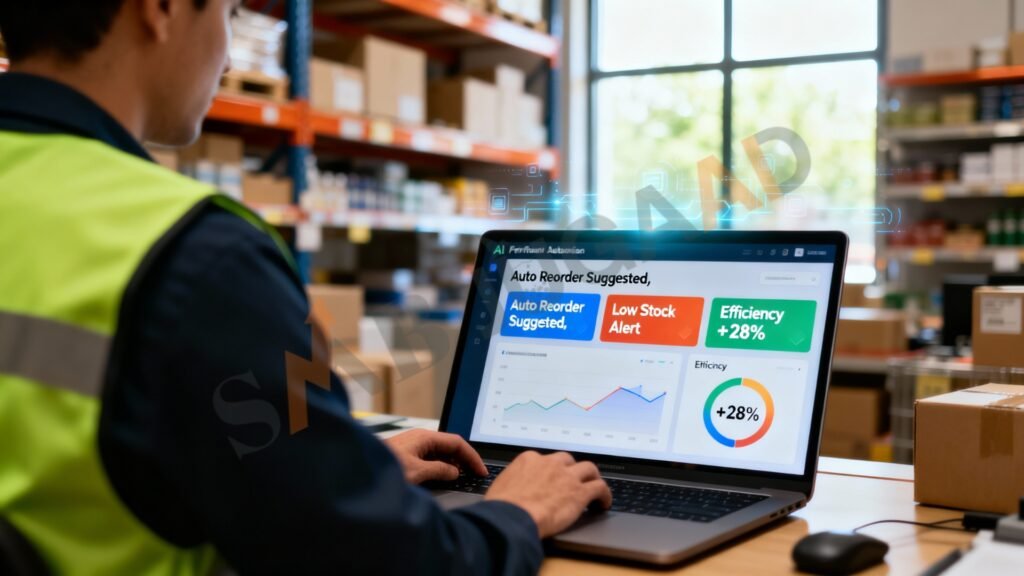
AI Recommends Smart Reordering Amounts
Instead of guessing order quantities, AI gives precise guidance:
- “Order 12 more units of this by Friday.”
- “Reduce order of this item from 50 to 20 units.”
- “Expect a surge in soda next week due to hot weather.”
It optimizes cash flow by keeping the right amount of inventory — no more, no less.
AI Identifies Slow-Moving & Dead Inventory
AI flags:
- products that don’t sell
- items reaching expiration
- SKUs that tie up cash
- categories losing popularity
Local store owners can then run promotions or reduce inventory.
AI Helps Plan for Supplier Delays
AI tracks supplier patterns:
- late deliveries
- inconsistent stock
- price volatility
It adjusts demand forecasting accordingly so your store isn’t blindsided.
AI Reduces Shrinkage & Waste
For groceries, fresh produce, bakeries, liquor stores, and pharmacies with expiry-sensitive products, AI offers:
- expiration prediction
- automatic markdown suggestions
- “sell-by” reminders
- optimized replenishment
For groceries, fresh produce, bakeries, liquor stores, and pharmacies with expiry-sensitive products, AI offers:
AI Auto-Generates Reports & Insights
Store owners get easy-to-read reports:
- Top selling items
- Most profitable SKUs
- High-demand time windows
- At-risk items
- Category performance
- Waste patterns
You no longer need to spend hours analyzing spreadsheets.
You no longer need to spend hours analyzing spreadsheets.
Case Study 1: Local Grocery Store (Ohio)
Problem: Overstocking perishables + constant spoilage
AI Solution: Demand forecasting + expiration alerts
Results:
- 50% reduction in waste
- 18% revenue boost
- 32% better stock accuracy
Case Study 2: Pet Supply Store (Arizona)
Problem: Running out of best-selling items
AI Solution: Smart reorder recommendations
Results:
- 40% fewer stockouts
- 22% increase in recurring sales
Case Study 3: Boutique Clothing Store (New York)
Problem: Guessing fashion trends
AI Solution: AI trend prediction + seasonal modeling
Results:
- 37% improvement in inventory turnover
- 15% reduction in unsold stock
Case Study 4: Liquor Store (Florida)
Problem: Guessing fashion trends
AI Solution: AI trend prediction + seasonal modeling
Results:
- 28% increase in holiday sales
- Zero stockouts for top-selling items
Case Study 5: Hardware Store (Texas)
Problem: Supplier delays affecting sales
AI Solution: Lead-time-aware demand forecasting
Results:
- 30% better inventory scheduling
- 12% fewer lost sales
Why Every Local U.S. Store Should Adopt AI in 2026
AI brings enterprise-level capabilities to small stores without the cost of a corporate tech stack. It helps store owners:
- stay competitive
- increase revenue
- reduce waste
- prepare for demand spikes
- improve customer loyalty
- maintain availability of best sellers
Local stores adopting AI in 2026 will outperform those relying on guesswork — guaranteed.
Conclusion
AI is not replacing store owners — it’s empowering them.
With AI-powered inventory and demand planning, local stores gain:
- Predictability
- Reduced expenses
- Higher customer satisfaction
- Faster turnover
- Stronger profit margins
- maintain availability of best sellers
Sam’s convenience store in Cleveland is just one example.
Local stores across the U.S. can thrive in 2026 by adopting AI as their silent business partner — working 24/7, forecasting accurately, and ensuring smarter decisions every single day.
“If people like you, they’ll listen to you, but if they trust you, they’ll do business with you.” – Zig Ziglar
Also Read: AI Ethics for Small Medium Business: How to Protect Your Customers and Build Trust in 2025
FAQs
Is AI expensive for local stores?
Do I need technical skills to use AI?
Can AI work for small stores with limited data?
What AI tools are best for inventory planning?
How fast does AI forecasting improve accuracy?
By Srinivas GRK
Srinivas GRK is the Founder of SMBJugaad LLC and a Cloud, AI, and Oracle Expert with over two decades of experience in technology and digital transformation. He’s passionate about helping small and mid-sized businesses leverage AI, Cloud, and smart automation to scale faster. You can connect with Srinivas on LinkedIn