

- SMB Jugaad
- November 18, 2025
- Business

By Srinivas GRK 👉
The Wake-Up Call: A Small Business Owner’s Mistake That Changed Everything
In early 2024, Jenna, a small marketing agency owner in Boston, received a call that made her heart sink.
One of her long-term clients had just received a campaign report that included data from another client’s file — a complete breach of confidentiality.
The culprit? An AI-powered writing assistant her team had started using to automate client reports. A simple mistake — copying data into a public AI system — caused private information to be stored and reused unknowingly.
Jenna had always seen AI as a productivity boost, not a risk. But that incident taught her an expensive lesson: AI ethics for small medium business isn’t just about compliance — it’s about trust, transparency, and survival.
In 2025, as AI tools become inseparable from business operations, SMBs across the U.S. are realizing that ethical AI use is not optional anymore — it’s essential.

Why AI Ethics Matters for Every Small Medium Business
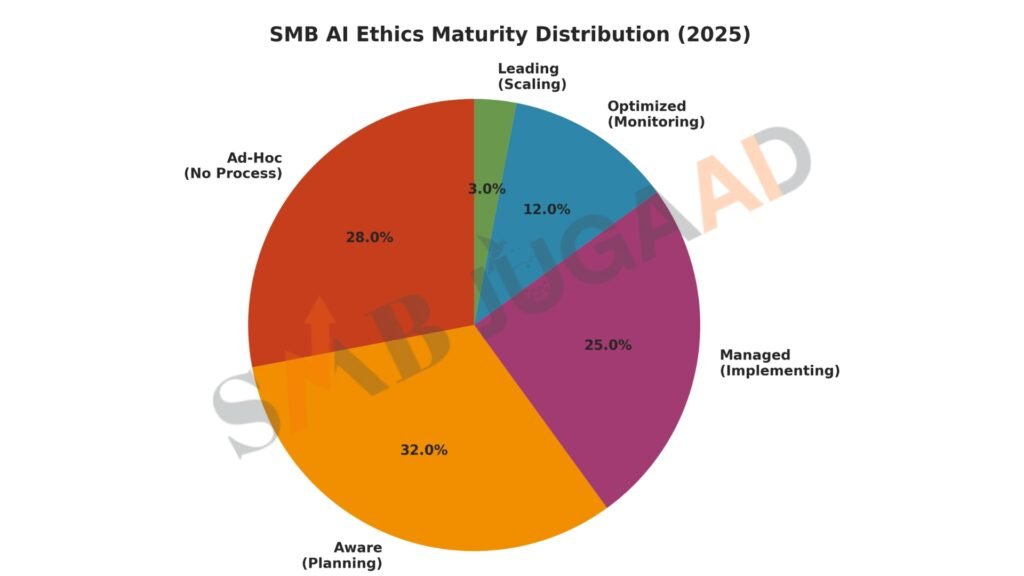
Artificial intelligence is now the backbone of marketing, sales, HR, and even customer service. A Salesforce SMB Trend Report (2025) shows that 74% of U.S. small medium businesses use at least one AI-based tool, but fewer than 30% have formal AI use or data policies.
That’s a dangerous gap.
Unlike large enterprises, SMBs often rely on reputation and close customer relationships. One ethical slip — like misusing customer data or generating biased content — can lead to legal exposure and reputational damage.
AI ethics for small medium business ensures that innovation doesn’t come at the cost of integrity. It’s about handling data responsibly, using AI transparently, and keeping the “human touch” in every decision AI helps make.
What Is AI Ethics for Small Medium Business?
AI ethics for small medium business means using artificial intelligence responsibly — ensuring that all AI tools and processes respect privacy, fairness, and transparency while keeping human oversight in control.
In short:
- Protect customer and employee data
- Avoid bias and unfair outcomes
- Be transparent when using AI
- Always keep humans in charge of decisions
This ethical approach ensures SMBs use AI safely, legally, and in ways that strengthen customer trust.

The Three Core Pillars of AI Ethics for Small Medium Business
Data Privacy and Security
AI systems process large volumes of sensitive information — customer emails, billing details, and behavioral data. Protecting that information is the cornerstone of ethical AI.
In 2025, the Federal Trade Commission (FTC) reported that 43% of U.S. cyberattacks targeted small and mid-sized businesses — often due to weak data protection or careless software integrations.
To stay safe, small medium businesses must:
- Encrypt customer data
- Limit access to AI systems
- Regularly review privacy policies of AI tools
Enterprises had this. Small businesses did not.
Fairness and Bias Prevention
AI systems learn from data — and data often contains human bias. If unchecked, AI can unintentionally discriminate in hiring, pricing, or marketing.
Example: A small hiring firm in Texas discovered that its AI resume screener favored male candidates due to biased historical data. After an independent audit, the company retrained the model and implemented transparent review steps.
For small medium businesses, AI ethics means proactively checking for bias — not waiting for it to be exposed publicly.
Every algorithm should be explainable. If you can’t explain why AI made a decision, it’s time to re-evaluate the system.
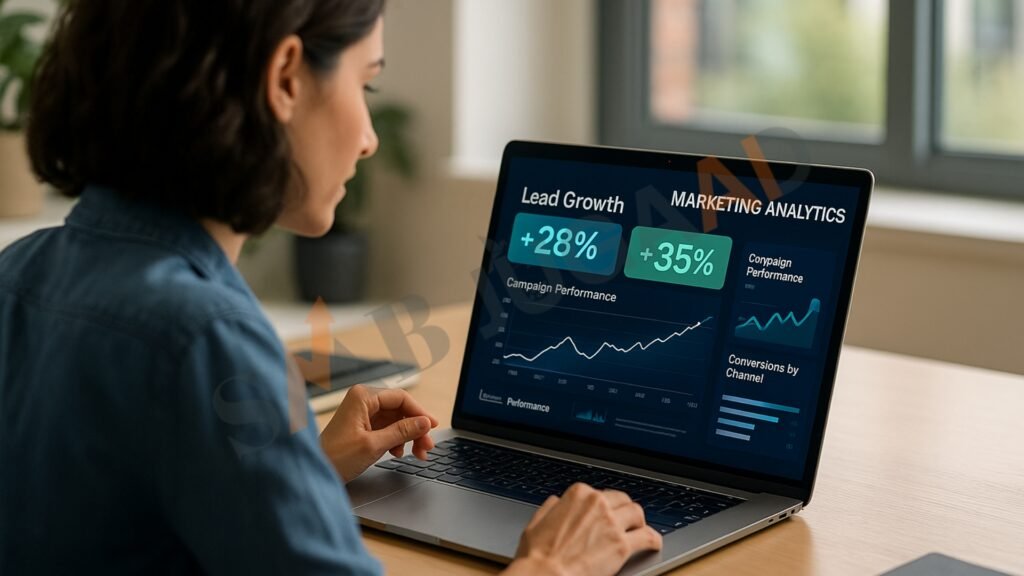
When the trust is high, communication is easy, instant, and effective. - Stephen Covey
Also Read: AI Ethics for Small Medium Business: How to Protect Your Customers and Build Trust in 2025
Transparency and Human Oversight
Customers have a right to know when they’re interacting with AI.
SMBs should disclose when chatbots, recommendation engines, or automation systems are in use.
Transparency isn’t a weakness — it’s a trust-builder. A Pew Research (2025) study revealed that 61% of American consumers prefer companies that clearly disclose AI usage in their services.
Adding short disclaimers such as “This message was generated by AI and reviewed by our team” helps ensure accountability while maintaining credibility.
The Hidden Risks of Ignoring AI Ethics
When small medium businesses overlook AI ethics, they face multiple risks:
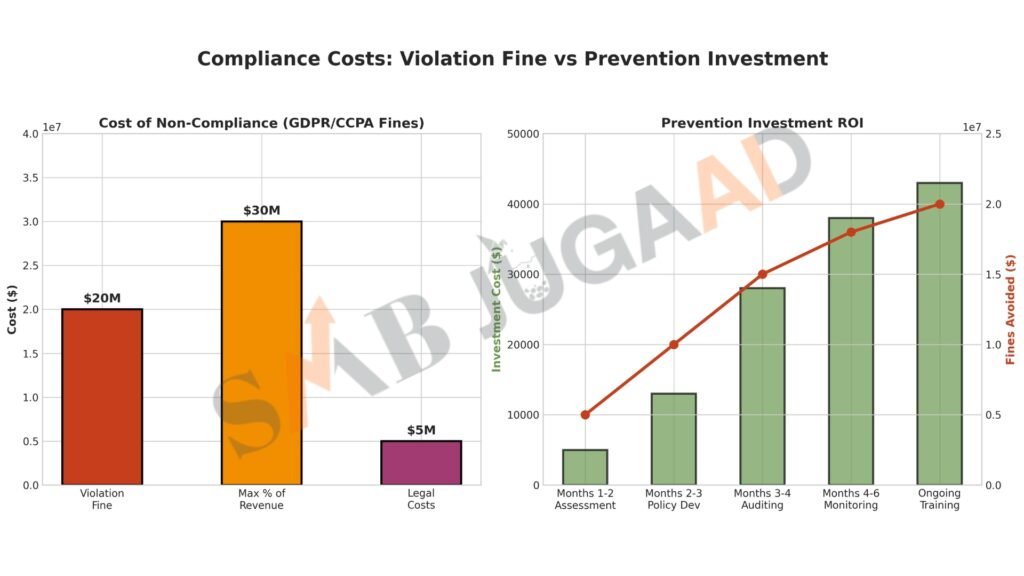
- Legal Risks: Misusing AI or customer data can violate GDPR (Europe) or CCPA (California) laws.
- Reputational Risks: Customers lose trust quickly after a data breach or bias scandal.
- Financial Risks: Data violations can cost SMBs up to $50,000 per incident in fines and lost business.
- Operational Risks: Over-reliance on unchecked AI can lead to misinformation, errors, and even fraud.
A 2025 IBM Global SMB Survey found that 59% of small medium business owners admitted they didn’t know whether their AI tools handled data ethically. This lack of awareness is now one of the biggest threats to sustainable growth.
The U.S. Context: AI Ethics Is Becoming Law
In the United States, federal and state regulations are tightening:
- California, New York, and Colorado have passed data privacy acts requiring transparency in AI use.
- The U.S. National Institute of Standards and Technology (NIST) introduced the AI Risk Management Framework (RMF) — now a model for ethical compliance.
- The FTC’s 2025 guidelines state that any AI tool processing consumer data must include a visible consent mechanism.
Independent AI consultants now play a critical role in helping small businesses interpret and comply with these evolving standards affordably.
Case Study: A Retailer’s Journey to Ethical AI
In Philadelphia, a boutique apparel brand used AI to segment customers for email marketing. Unfortunately, a configuration error led to personal information (purchase history and birthdays) being shared across customer segments.
Instead of hiding it, the business immediately notified affected users and partnered with an independent AI consultant to rebuild their workflow with privacy filters and clear consent tracking.
Their transparency turned a potential PR disaster into a trust-building moment. Within 60 days, customer retention actually increased by 12%.
Moral of the story: AI mistakes happen. Ethical recovery and openness define the brand’s strength.
How Independent AI Consulting Helps SMBs Stay Ethical
Independent AI consultants serve as “AI ethics partners” for small medium businesses. They don’t sell tools — they build trust frameworks.
They help SMBs:
- Audit where AI interacts with customer data
- Review vendor privacy and compliance documentation
- Implement human-in-the-loop systems
- Establish internal AI use policies and staff training
At SMBJugaad, we call this process “Responsible AI Enablement” — combining automation efficiency with ethical accountability.
Five Steps to Build AI Ethics for Small Medium Business
Step 1: Identify Data Touchpoints
Map every point where data flows into your business — website forms, CRMs, chatbots, or analytics dashboards.
Step 2: Evaluate Risks
Ask, what could go wrong if this data were misused or leaked? Independent consultants can assess technical and human risks.
Step 3: Write a Simple AI Policy
Create a one-page document explaining how you use AI and what data it touches. Share it publicly to show transparency.
Step 4: Train Your Team
Even the best AI tools fail if users don’t understand ethical practices. Train everyone on responsible AI behavior.
Step 5: Review Regularly
Audit every 3–6 months. Technology changes fast, and so do risks.
Turning Ethics into a Competitive Advantage
Ethical AI isn’t just about avoiding mistakes — it’s a marketing differentiator.
According to a HubSpot 2025 study, 84% of U.S. consumers trust small businesses more when they clearly explain how AI is used.
When your website, emails, or proposals include notes about ethical AI practices, it signals transparency, professionalism, and care.
In an era of data fear and automation overload, authenticity wins.
SMBJugaad’s Commitment to Responsible AI for SMBs
At SMBJugaad, we help U.S. small medium businesses leverage AI confidently and responsibly.
Our independent consulting approach ensures AI serves your brand values — not the other way around.
We offer:
- AI Readiness and Ethics Audits
- Privacy Policy Creation for AI Tools
- Ethical AI Implementation Workshops
- Vendor-Neutral Automation Advice
We believe AI should empower, not exploit. That’s why our mission is to help SMBs scale ethically — balancing efficiency with empathy.
The Future of AI Ethics for Small Medium Business
The coming years will redefine trust in business.
By 2026, AI use in U.S. SMBs will surpass 80%, but only those who embed ethics will thrive long-term.
Customers will ask:
“Is this business using my data safely?”
“Do they review what AI says or does?”
The companies that answer “yes” transparently — and prove it — will lead their industries.
AI is not replacing human intelligence; it’s amplifying it.
But the smarter AI gets, the more vital human ethics becomes.
Content builds relationships, relationships are built on trust. Trust drives revenue. - Andrew Davis
What does AI ethics mean for small medium business?
How can SMBs protect customer data in AI systems?
Should every SMB have an AI ethics policy?
How often should SMBs review their AI systems?
Why work with independent AI consultants?
By Srinivas GRK
Srinivas GRK is the Founder of SMBJugaad LLC and a Cloud, AI, and Oracle Expert with over two decades of experience in technology and digital transformation. He’s passionate about helping small and mid-sized businesses leverage AI, Cloud, and smart automation to scale faster. You can connect with Srinivas on LinkedIn