
- SMB Jugaad
- December 11, 2025
- Business

By Srinivas GRK 👉
On a windy Thursday morning in Chicago, Maria — owner of a small handmade jewelry boutique — opened her shop and braced herself for another slow day. Despite having beautiful pieces, loyal customers, and a strong local reputation, foot traffic had dropped sharply over the past year. Online stores, shifting consumer habits, unpredictable weather, and rising advertising costs were all working against her.
She tried everything: social media ads, local newspaper listings, loyalty cards, in-store promotions — nothing seemed to consistently drive people into her shop.
One evening, during a retail networking event, a fellow store owner suggested:
“You should try predictive AI marketing. It tells you exactly who will walk in, when, and why.”
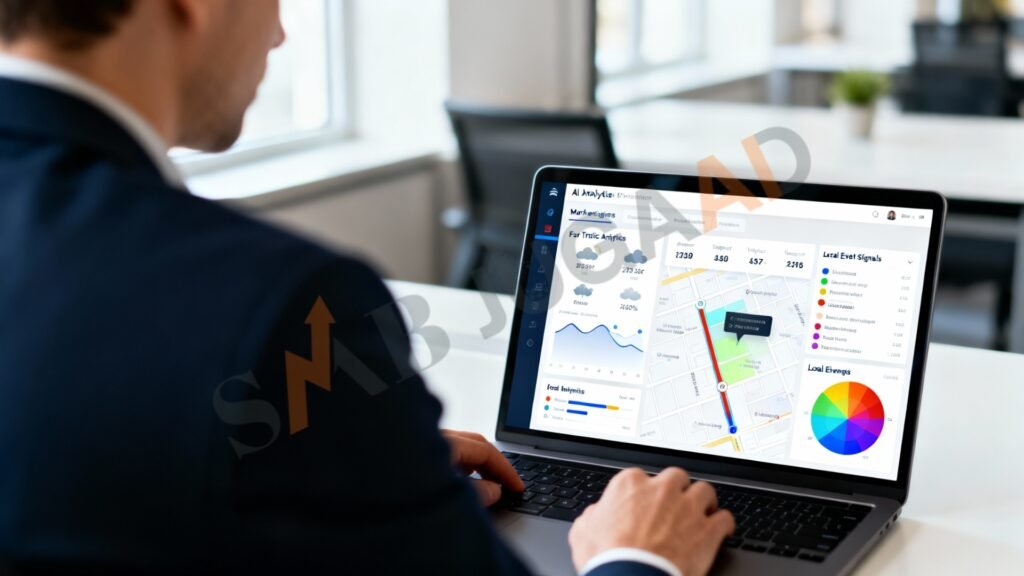
Skeptical but out of options, Maria tested an AI-driven marketing tool that analyzed customer behavior, neighborhood foot traffic patterns, weather forecasts, local events, purchase history, and engagement trends.
Within weeks, she saw a dramatic change:
- Foot traffic increased
- Walk-in conversions surged
- Repeat visits doubled
- Marketing costs dropped
- New customers discovered her store
AI didn’t just advertise for her — it predicted when customers were most likely to visit and crafted tailored campaigns that brought them in at the right moment.
Today, Maria says:
“Predictive AI marketing saved my store.”
Across the U.S., thousands of local shops, cafés, salons, boutiques, pet stores, fitness studios, and service businesses are discovering the same truth:
Predictive AI marketing is the most powerful way to drive real people into real stores.
Why Foot Traffic Matters More Than Ever in 2026
For physical stores, foot traffic = revenue.
But in today’s landscape, it is harder than ever to maintain:
- Online competition is rising
- Customer attention spans are shrinking
- Weather patterns are unpredictable
- Seasonal demand varies
- Advertising is more expensive
- Customer loyalty is fragile
- Communities are shifting
Traditional marketing simply cannot predict:
❌ When customers will visit
❌ Which promotions will work
❌ What external factors affect demand
❌ Which audience segments respond best
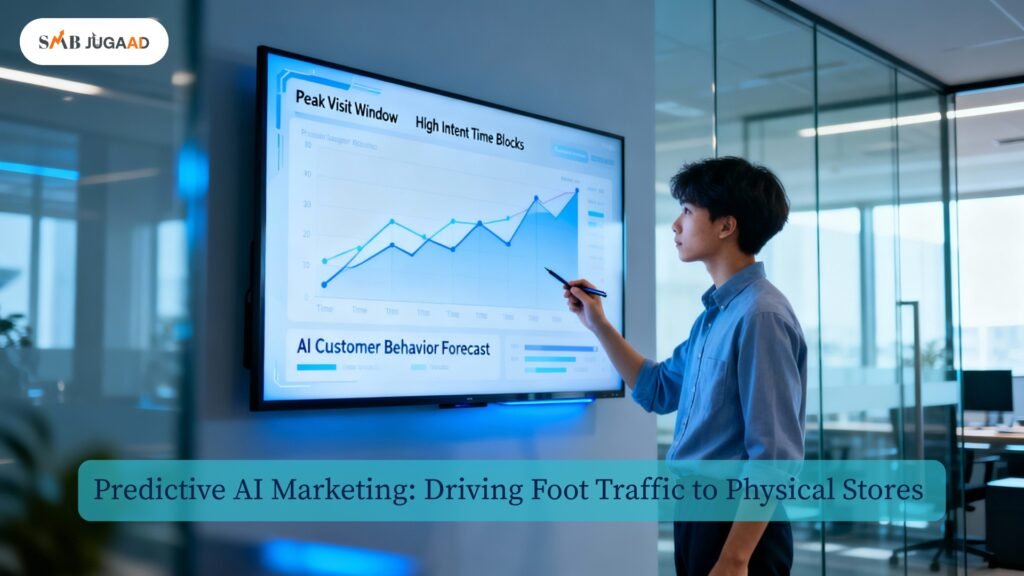
Predictive AI marketing fills this gap by using data-driven insights to anticipate, influence, and drive foot traffic.
What Is Predictive AI Marketing?
Predictive AI marketing uses machine learning to analyze:
- Historical sales
- Customer profiles
- Online behavior
- Neighborhood demographics
- Foot traffic patterns
- Weather forecasts
- Local events
- Social engagement
- Purchase history
- Competitor changes
It then predicts:
✔ When customers are most likely to visit
✔ Who is most likely to walk in
✔ What offers will bring them
✔ Which channels will work best
✔ How much demand to expect
✔ How to segment your audience
✔ What content will drive in-store action
“The lead generation process starts by finding out where your target market ‘lives’ on the web.” – Wayne Davis
How Predictive AI Marketing Drives Foot Traffic (Step-by-Step)
AI Analyzes Local Customer Data
Predictive AI gathers insights from:
- POS systems
- Wi-Fi check-ins
- Mobile location data
- Loyalty programs
- CRM systems
- Local demographic data
- Website visits
This helps identify patterns behind walk-ins.
AI Identifies High-Intent Shoppers
AI detects signals like:
- People near your store
- Returning customers passing
- Website visitors looking for store hours
- Users browsing specific product categories
- Email subscribers with recent activity
- which categories will trend
This enables targeted, timely outreach.
AI Predicts the Best Time to Run Promotions
Using pattern recognition, AI models:
- Weather-driven shopping changes
- Morning vs. evening walk-in likelihood
- Weekend vs. weekday demand
- Pre-payday vs. post-payday shopping cycles
- Holiday demand surges
- Local community events
- Back-to-school season
- Sports schedules
AI tells you exactly when to push offers.
AI Personalizes Marketing Campaigns
Predictive AI crafts campaigns based on:
- Buyer interests
- Geography
- Shopping frequency
- Recent behavior
- Age groups
- Past purchases
- Local event relevance
These campaigns feel tailor-made, not generic.
AI Runs Geo-Targeted Ads to Nearby Shoppers
AI helps target customers:
- Within 3–5 miles
- Visiting nearby businesses
- Attending events close to your shop
- Living in specific ZIP codes
Perfect for restaurants, salons, cafés, boutiques, and retail stores.
AI Predicts Store Foot Traffic for Staffing Needs
Predictive AI forecasts:
✔ peak hours
✔ slow days
✔ unexpected surges
✔ seasonal changes
This helps schedule staff efficiently and avoid overcrowding or under-staffing.
AI Measures Campaign Impact Automatically
It tracks:
- Foot traffic before and after campaigns
- Customer response rates
- Redemption of offers
- Return visits
- New vs. repeat customers
No more guessing what actually worked.
Real Case Studies: How AI Drove Foot Traffic for U.S. Local Stores
Case Study 1: Boutique Clothing Store (New Jersey)
Challenge: Slow weekday traffic
AI Solution: Weather-forecast-based campaigns
Results:
- 22% increase in weekday walk-ins
- 17% boost in accessory sales
Case Study 2: Coffee Shop (Seattle)
Challenge: Heavy competition + unpredictable demand
AI Solution: Geo-targeted mobile ads + morning trend forecasting
Results:
- 35% more morning walk-ins
- 28% increase in loyalty sign-ups
Case Study 3: Pet Supplies Store (Arizona)
Challenge: High marketing spend with poor in-store visits
AI Solution: Predictive audience segmentation
Results:
- 30% reduction in ad spend
- 26% more foot traffic from existing customers
Case Study 4: Beauty Salon (Miami)
Challenge: Last-minute cancellations
AI Solution: AI-driven waitlist prediction + personalized SMS
Results:
- 18% more filled appointment slots
- 33% more product upsells
Case Study 5: Hardware Store (Texas)
Challenge: Seasonal demand volatility
AI Solution: AI demand forecasting integrated with local weather
Results:
- 41% increase in foot traffic before storms
- Zero stockouts on critical items
Why Predictive AI Marketing Works So Well
-
Timing Is Everything
AI ensures offers reach customers exactly when they’re ready to shop.
-
Precise Targeting
No wasted budget. Only the right people get the right messages.
-
Hyper-Personalization
Customers visit when they feel understood and valued.
-
Better Store Experience
AI predicts foot traffic → optimal staffing → better service → more sales.
-
Real-Time Adaptation
AI updates based on new data — unlike static marketing plans.
-
How AI Sales Assistants Increase Conversions (Deep Dive)
AI reduces friction → leads move through the funnel faster.
Conclusion
Predictive AI marketing gives physical stores a massive advantage in 2026:
- More walk-ins
- Higher conversions
- Better timing
- Precise targeting
- Lower marketing costs
- Improved customer experiences
Whether you run a boutique, a bakery, a vape shop, a clothing store, a barbershop, or a local market — predictive AI marketing helps you stay competitive, relevant, and profitable.
The stores that use AI now will become the neighborhood favorites tomorrow.
“If people like you, they’ll listen to you, but if they trust you, they’ll do business with you.” – Zig Ziglar
Also Read: AI Ethics for Small Medium Business: How to Protect Your Customers and Build Trust in 2025
FAQs
Is predictive AI marketing expensive?
Do I need a large customer base?
Can AI integrate with my POS system?
Does AI work for multi-location stores?
Does AI replace human marketers?
By Srinivas GRK
Srinivas GRK is the Founder of SMBJugaad LLC and a Cloud, AI, and Oracle Expert with over two decades of experience in technology and digital transformation. He’s passionate about helping small and mid-sized businesses leverage AI, Cloud, and smart automation to scale faster. You can connect with Srinivas on LinkedIn