
- SMB Jugaad
- November 28, 2025
- Business

By Srinivas GRK 👉
On a rainy November morning in Pittsburgh, Daniel — owner of a growing home-improvement supplies store — opened his monthly financial report with a sinking feeling. Sales had dipped again. Inventory wasn’t matching demand. Orders were arriving too late or too early. His busiest weeks were unpredictable, and he often overstocked slow-moving items while running out of high-demand products.
This inconsistency hurt not only his revenue but also customer trust.
“Why didn’t you keep the cabinets in stock?” one frustrated contractor asked.
“Can you guarantee the next shipment date?” another questioned.
Daniel wasn’t failing because of poor operations — he just couldn’t predict sales accurately. His spreadsheets, manual tracking, and yearly trends were no longer enough.
One day, another business owner introduced him to AI-powered sales forecasting.
Within weeks, Daniel’s predictions became more accurate than ever.
He knew which product would peak, which one would dip, and exactly how much inventory to order.
Today, Daniel says adopting AI wasn’t a tech upgrade — it was the moment his small business finally felt predictable, stable, and scalable.
His story mirrors thousands of small and medium businesses across the U.S.
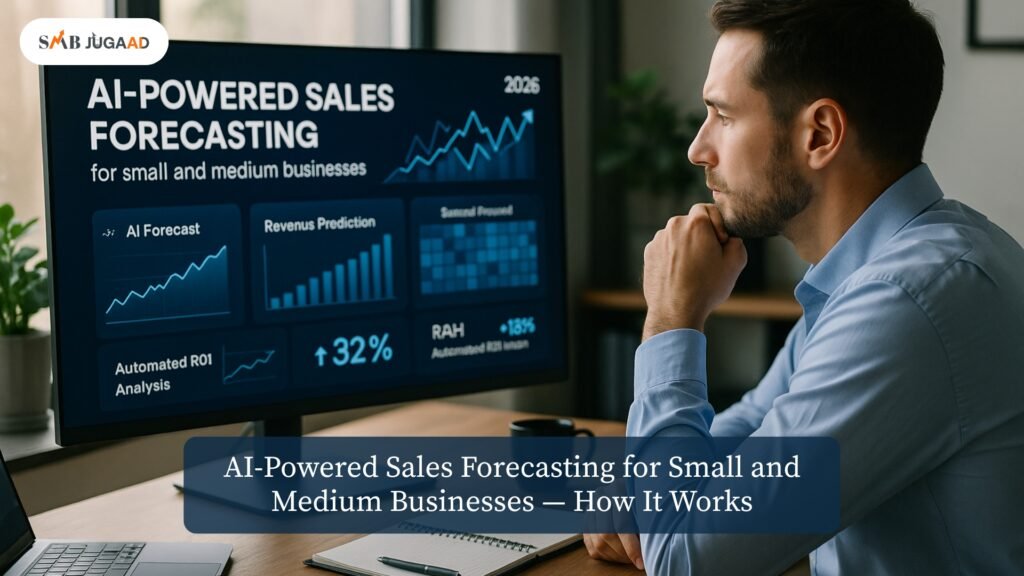
In 2026, AI-powered forecasting isn’t a luxury — it’s a competitive necessity.
Why Sales Forecasting Matters for Small and Medium Businesses
Small and medium businesses (SMBs) operate with tight margins, limited manpower, and volatile demand. Even a minor forecasting error can lead to:
- Overstocking → Cash tied up in inventory
- Stockouts → Lost sales & unhappy customers
- Incorrect staffing → Overspending or insufficient support
- Poor budgeting → Misdirected investments
- Low cash flow → Growth delays
Traditional forecasting (spreadsheets, last-year trends, gut instinct) simply cannot keep up with the fast-changing U.S. market anymore.
AI changes everything.

What Is AI-Powered Sales Forecasting?
AI-powered sales forecasting uses machine learning models to analyze:
- Historical sales
- Customer behavior
- Market trends
- Geography
- Seasonality
- Marketing activity
- Pricing changes
- Competitor impact
- External factors (weather, events, inflation, holidays)
It then predicts:
- Future sales
- Demand for each product/service
- Revenue patterns
- Seasonal peaks & dips
- Best inventory levels
- Optimal pricing
- Staffing requirements
How AI-Powered Sales Forecasting Works (Step-by-Step)
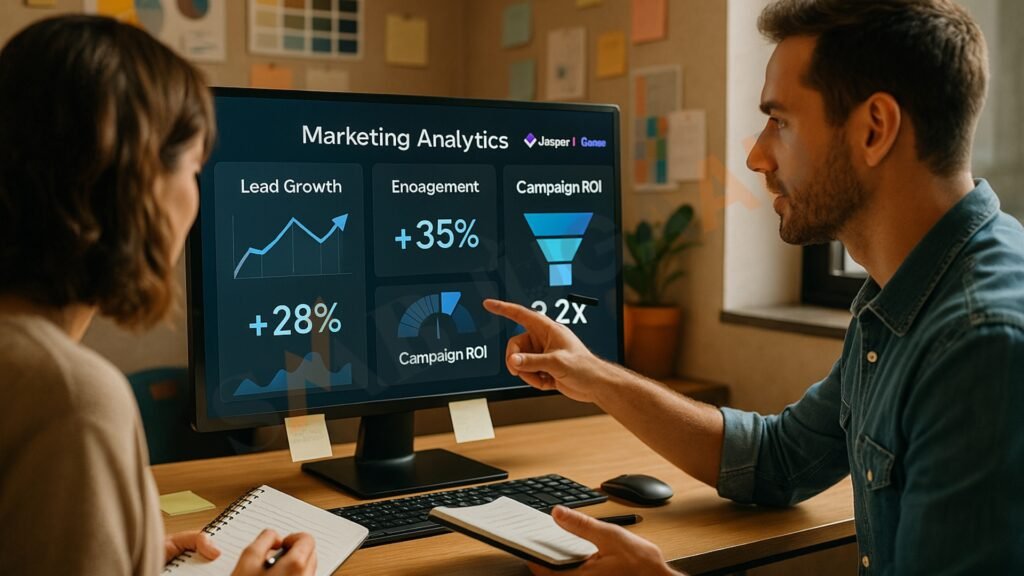
Data Collection (Internal + External)
AI gathers data from multiple sources:
Internal Business Data
- Sales history
- Customer orders
- Pricing changes
- Promotions
- Inventory levels
- Refunds & cancellations
- Website analytics
- CRM activity
External Factors
- Seasonal trends
- Economic indicators
- Industry shifts
- Weather patterns
- Competitor pricing
- Regional buying behavior
This gives AI a complete view of what influences your business’s performance.
Data Cleaning & Pattern Recognition
AI identifies:
- Repeated patterns
- Weekly/monthly trends
- Seasonal variations
- Sudden spikes or dips
- Customer buying habits
If your sales always drop the week after Thanksgiving but spike the week before Christmas, AI learns that pattern.
Predictive Modeling
AI uses machine learning models like:
- Time-series forecasting
- Regression analysis
- Neural networks
- Ensemble models
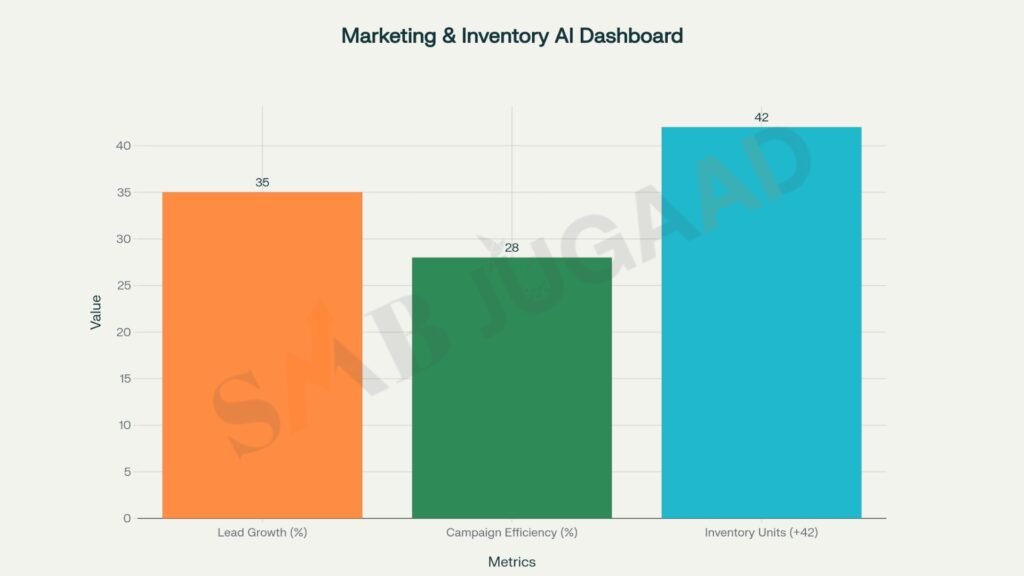
These models simulate multiple future scenarios and predict the most accurate possible outcome.
When the trust is high, communication is easy, instant, and effective. - Stephen Covey
Also Read: AI Ethics for Small Medium Business: How to Protect Your Customers and Build Trust in 2025
Identifying Forecast Drivers
AI doesn’t just predict — it explains why sales will change.
For example, AI may tell you:
- “Sales will drop next week due to low search volume.”
- “Demand will spike after a promotional email.”
- “Rainy weather increases delivery orders by 18%.”
This insight is gold for small businesses.
Generating Forecast Outputs
AI generates:
- Weekly, monthly & quarterly sales projections
- Product-level demand predictions
- Inventory recommendations
- Revenue projections
- Customer segment forecasts
- Staffing suggestions
Continuous Learning
The more data AI receives, the smarter the forecasts become.
- Every sale
- Every marketing campaign
- Every season
- Every price change
… helps the model refine itself automatically.
Benefits of AI-Powered Sales Forecasting for Small and Medium Businesses
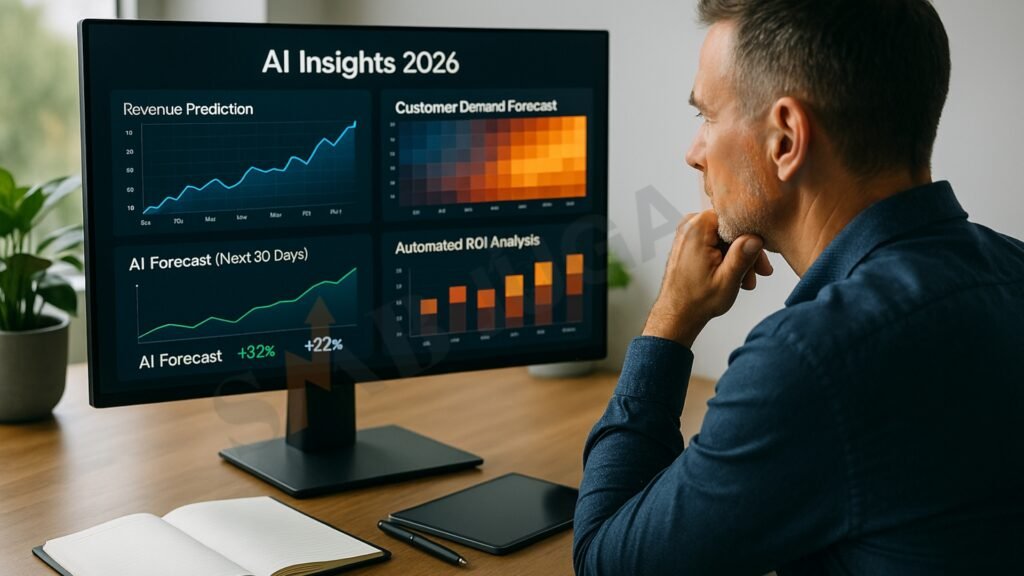
Accurate Inventory Planning
No more overstocking slow movers
No more stockouts on bestsellers
Your inventory becomes precise and profitable.
Better Cash Flow Management
With accurate forecasts, you can:
- Plan purchases
- Reduce waste
- Improve budgeting
- Predict high-revenue periods
Cash flow becomes predictable instead of reactive.
Optimized Staffing
AI tells you:
- When you’ll need more staff
- When you can reduce hours
- Peak days and slow days
Great for retail, salons, restaurants, warehouses, clinics, and service businesses.
Smarter Marketing Decisions
AI helps determine:
- Best days for promotions
- Campaigns that boost sales
- Customer segments to target
- Most effective offers
Marketing becomes data-driven, not guesswork.
Better Pricing Strategy
AI forecasting can simulate:
- How discounts affect sales
- How price increases impact demand
- Competitor price fluctuations
This helps you price confidently.
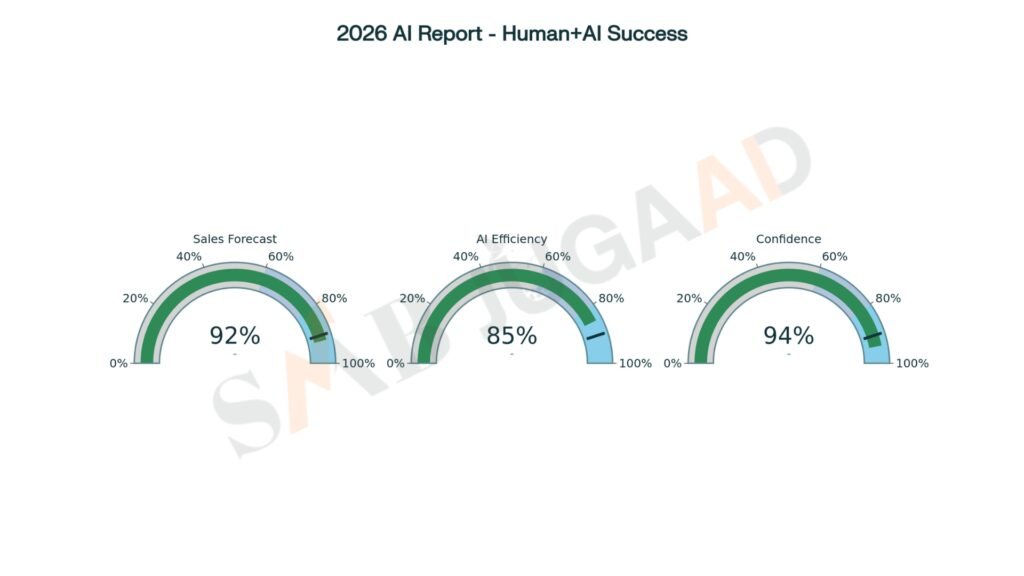
Higher Customer Satisfaction
When you always have the right product, the right staff, and the right timing — customers love it.
Real U.S.Examples of AI Forecasting (2026 Edition)
-
California — E-Commerce Brands
AI tracks seasonal traffic + weather + trends → predicts peak shopping weeks.
-
Texas — Home Improvement & Construction
AI forecasts seasonal demand dips during storms or heat waves.
-
Florida — Health & Wellness Clinics
AI predicts appointment surges during winter illnesses.
-
New York — Retail Stores
AI forecasts tourist spikes, holiday trends, and category-specific demand.
-
Illinois — Restaurants & Bakeries
AI predicts weekend rushes, catering demand, and daily inventory needs.
Conclusion
AI-powered sales forecasting isn’t just for large corporations anymore.
Today, any small or medium business — retail, service, manufacturing, hospitality, healthcare — can access predictive insights once reserved for enterprise companies.
"Men are rich only as they give. He who gives great service gets great rewards." – Elbert Hubbard,
Is AI forecasting expensive for small businesses?
Do I need to be technical to use AI for forecasting?
Which AI tools help with forecasting?
Can AI forecasting really improve revenue?
How often should AI forecasts be updated?
By Srinivas GRK
Srinivas GRK is the Founder of SMBJugaad LLC and a Cloud, AI, and Oracle Expert with over two decades of experience in technology and digital transformation. He’s passionate about helping small and mid-sized businesses leverage AI, Cloud, and smart automation to scale faster. You can connect with Srinivas on LinkedIn