
- SMB Jugaad
- November 26, 2025
- Business

By Srinivas GRK 👉
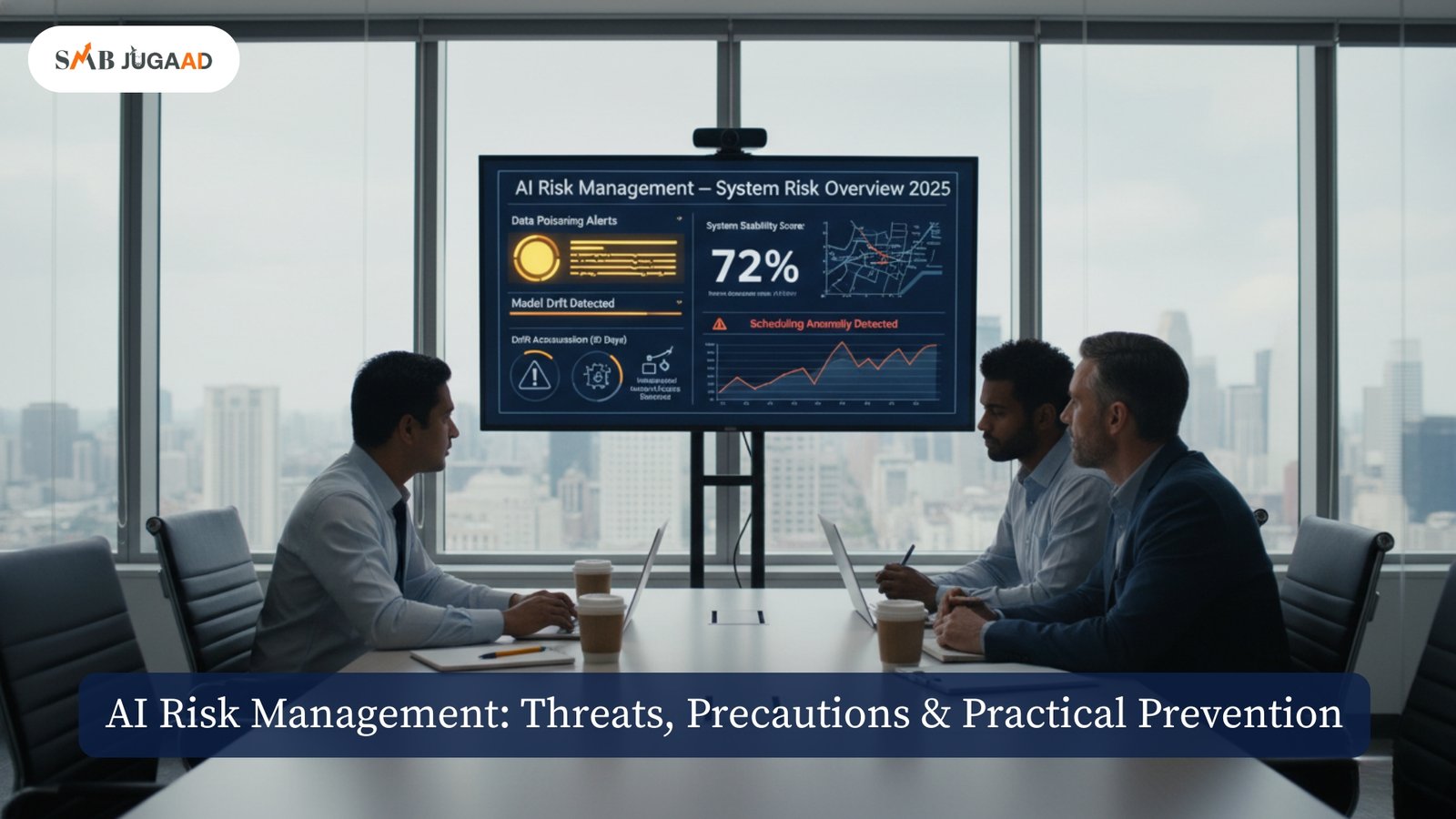
On a rainy Thursday morning in Austin, Texas, Daniel — a CTO of a mid-sized logistics company — got an urgent call from his operations manager. Their AI scheduling system had suddenly begun generating faulty delivery routes, causing trucks to reroute unpredictably, delaying shipments worth thousands of dollars. Customers were calling nonstop. His team discovered that the AI model had been exposed to unverified data from a new vendor integration, triggering chaotic decisions.
Daniel’s heart sank. He wasn’t dealing with a simple “software glitch” — he was dealing with an AI risk event. The consequences were financial, reputational, and operational. As he scrambled to understand what went wrong, he realized the truth:
AI risks don’t hit hard because AI is dangerous — they hit hard because companies aren’t prepared.
This blog explains how organizations can avoid Daniel’s fate through practical AI risk management, real-world precautions, and clear prevention strategies.
What Is AI Risk Management?
AI Risk Management refers to the systematic process of identifying, evaluating, prioritizing, mitigating, and monitoring risks associated with AI models, data pipelines, automations, and decision-making systems.
Why It Matters
AI systems today handle hiring, fraud detection, route planning, medical triage, security decisions, and financial approvals. Any error can lead to:
- Loss of revenue
- Legal penalties
- Bias and discrimination
- Downtime
- Compromised data
- Reputational damage
AI Risk Management ensures that AI becomes a strategic asset, not a liability.
Why AI Risk Management Matters Today
Global AI Adoption Is Exploding
- 91% of businesses in the U.S. are adopting AI tools.
- India is the fastest-growing AI adopter in Asia.
- The EU is implementing the world’s strictest AI regulations.
As adoption grows, so do risks — making AI Risk Management essential.
AI Mistakes Can Scale Fast
Unlike traditional software, AI models learn, predict, and automate at speed.
A single misclassification or a biased dataset can impact millions of decisions instantly.
Major Threats in AI Systems
Below are real-world threats every company must understand.
-
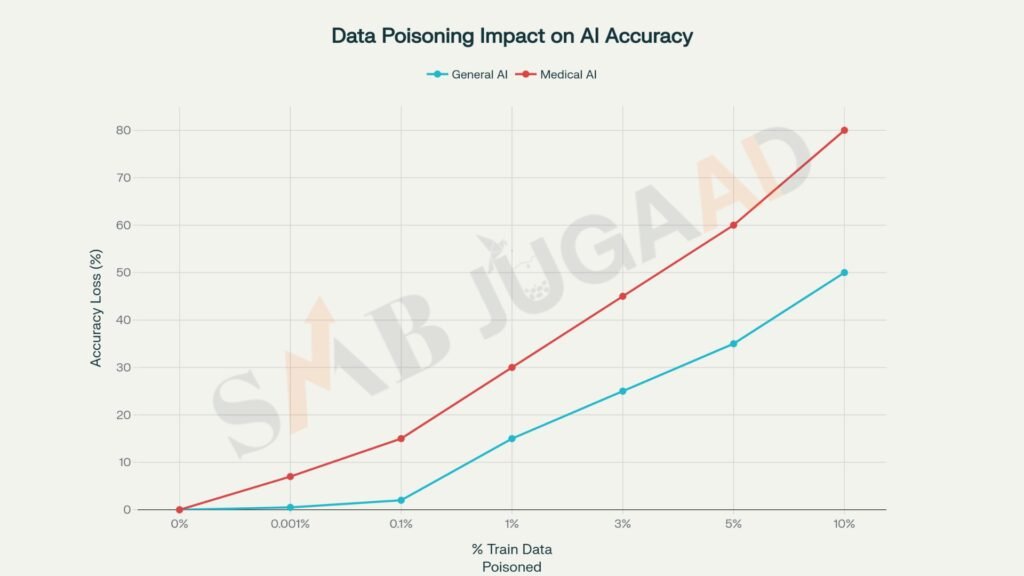
Data Poisoning Attacks
Hackers intentionally inject malicious data into training sets to corrupt AI behavior.
-
Model Hallucinations
LLMs generate false or fabricated information, leading to misinformation and incorrect decisions.
-
Bias and Discrimination
AI models may unintentionally discriminate based on gender, ethnicity, age, or location.
-
Over-Reliance on Automation
Human oversight declines, allowing incorrect decisions to go unnoticed.
-
Privacy & Security Violations
AI systems often process sensitive personal or organizational data — a huge liability if mishandled.
-
Model Drift
As real-world data changes, model accuracy steadily declines unless monitored.
-
Vendor Dependency Risks
Third-party AI tools can introduce security vulnerabilities and compliance gaps.
Precautions Every Business Must Implement
Data Quality Governance
Your AI is only as good as your data.
Implement:
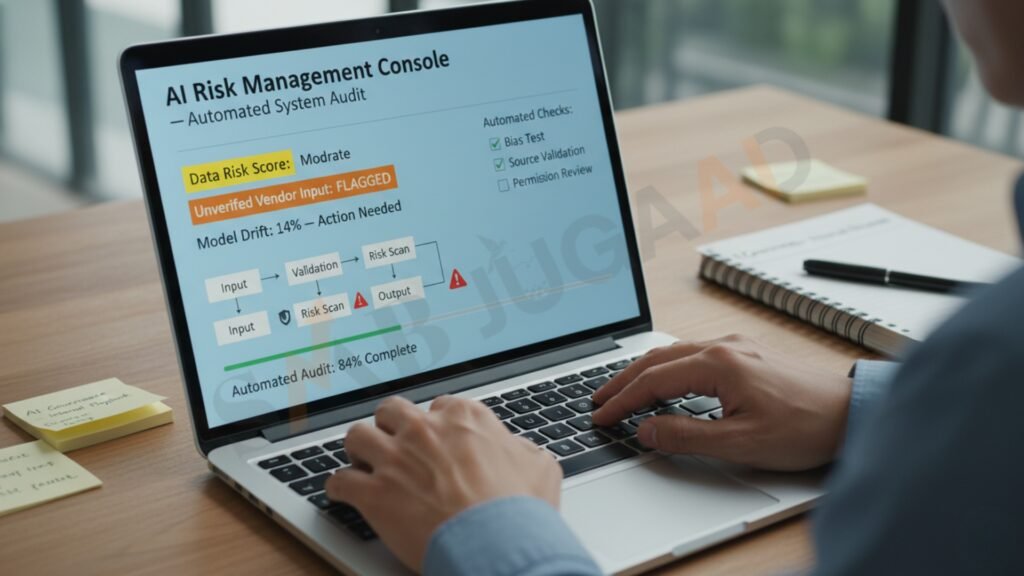
- Validation checks
- Source verification
- Bias testing
- Duplicate removal
- Access controls
Human-in-the-Loop
Never allow full automation for high-impact decisions.
Humans must review:
- Hiring decisions
- Medical recommendations
- Legal evaluations
- Security alerts
- Credit or loan approvals

When the trust is high, communication is easy, instant, and effective. - Stephen Covey
Also Read: AI Ethics for Small Medium Business: How to Protect Your Customers and Build Trust in 2025
Access Control & Authentication
To protect AI systems:
- Multi-factor authentication
- Role-based access
- Least-privilege principles
- Conditional access policies
Regular AI Audits
Audits should check:
- Regular fairness audits
- Bias-free training datasets
- Non-discriminatory decision processes
Industries like hiring, lending, insurance, real estate, and healthcare must pay special attention.
Safety, Reliability & Human Oversight
The new norm will be:
- Bias
- Accuracy
- Fairness
- Explainability
- Compliance
Red-Teaming AI Models
Red teams simulate adversarial attacks to test system resilience.

Practical Prevention Framework for AI Risk Management
The A-P-D-M Framework (Assess → Protect → Detect → Monitor) is ideal for SMBs, large enterprises, and startups.
Assess
Identify risks:
- What data is used?
- What decisions does AI influence?
- What failure can cause harm?
Protect
Implement guardrails:
- Data encryption
- Model access restrictions
- Bias mitigation pipelines
- RAG validation for LLM outputs
Detect
Enable real-time detection of:
- Drift
- Hallucinations
- Performance drop
- Adversarial attacks
Monitor
Continuous monitoring ensures models stay accurate and safe.
Building an AI Risk-Resilient Organization
A resilient business ensures AI is transparent, fair, secure, and reliable.
Form an AI Ethics Committee
Members:
- CTO
- Data scientists
- Legal teams
- Business heads
- External advisors
Build Internal Playbooks
Create documents for:
- AI usage policy
- Prompt governance
- Data handling
- Model monitoring
Train Employees
Especially for:
- Prompt engineering
- AI oversight
- Data validation
Tools & Best Practices
Tools for AI Risk Management
- Azure AI Content Safety
- AWS GuardDuty + Bedrock Guardrails
- Google Vertex AI Monitoring
- IBM AI Governance
- OpenAI Safety Features
- Snowflake Data Governance
Best Practices
- Keep humans in charge
- Never trust unverified data
- Use multi-layered guardrails
- Only adopt trustworthy vendors
- Keep audit logs for all model runs
- Rotate API keys regularly
Case Studies
-
U.S. Case Study — Healthcare AI Failure
A U.S. hospital deployed an AI triage tool that misclassified the severity of patient conditions due to biased historical data.
-
India Case Study — Banking Automation Drift
A financial institution in India faced losses after their fraud detection model drifted and flagged genuine transactions as fraud.
-
EU Case Study — Compliance Penalty
A European retailer received penalties for using a facial recognition AI system without transparency.
-
Global Case Study — Supply Chain AI Glitch
A global shipping company faced multimillion-dollar delays after an NLP model misinterpreted vendor documents.
Conclusion
AI is powerful, profitable, and transformative — but only when deployed responsibly.
AI Risk Management ensures your organization stays safe, compliant, efficient, and future-ready.
The companies that succeed in the AI era aren’t the ones who simply “use AI.”
They’re the ones who manage AI with wisdom.
"Men are rich only as they give. He who gives great service gets great rewards." – Elbert Hubbard,
What is AI Risk Management?
What are the biggest AI risks today?
How do I prevent AI hallucinations?
What industries need AI Risk Management the most?
Is AI regulation mandatory?
By Srinivas GRK
Srinivas GRK is the Founder of SMBJugaad LLC and a Cloud, AI, and Oracle Expert with over two decades of experience in technology and digital transformation. He’s passionate about helping small and mid-sized businesses leverage AI, Cloud, and smart automation to scale faster. You can connect with Srinivas on LinkedIn